COMPENSATING KEY PEOPLE WHEN SELLING YOUR CANADIAN BUSINESS

Compensating Key People When Selling Your Canadian Business: Navigating Risks and Human Dynamics
In the Canadian business landscape, a company backed by a robust leadership team is inherently more attractive to both financial buyers (like private equity firms) and strategic buyers (such as competitors or consolidators). These buyers value transferability, the ability of the business to thrive without heavy reliance on the original owner, which often translates to higher valuations and smoother transactions. However, the sale process introduces complexities around compensating and retaining key personnel. This article explores the core issues, the human elements at play, and strategies for sellers to mitigate their risks during the sale, contrasted with how buyers address "key man risk" after taking ownership.
The Issue: Compensation Challenges in Business Sales
When selling a business in Canada, key employees—those critical to operations, client relationships, or revenue generation—become pivotal to the deal's success. The issue arises from the need to incentivize these individuals to stay committed through the uncertainty of a sale while ensuring their compensation aligns with legal, tax, and market norms.
In Canada, the structure of the sale (asset vs. share) significantly impacts employees. In an asset sale, employees may be terminated by the seller and potentially rehired by the buyer, triggering severance obligations under provincial laws like Ontario's Employment Standards Act. In a share sale, employment continues seamlessly, but buyers may still need to address retention to prevent post-closing departures. Compensation complications include balancing incentives like bonuses or equity with tax implications, such as the recent federal provision allowing up to $10 million in tax-free capital gains for sales to employee ownership trusts.
Without proper compensation structures, sellers risk losing key talent mid-process, derailing due diligence or lowering the business's perceived value. Buyers, meanwhile, face "key man risk"—overdependence on specific individuals whose departure could erode the acquired company's performance.
Human Dynamics: Emotions and Motivations in the Mix
Business sales are not just financial transactions; they stir deep human emotions. Key employees often feel uncertainty about job security, cultural shifts, or changes in reporting structures, leading to anxiety or disengagement. Top performers, aware of their value, may view the sale as an opportunity to negotiate better terms or jump ship, especially if they perceive favoritism or lack of transparency.
From a psychological standpoint, loyalty to the seller can clash with self-interest. Employees may worry about integration into a larger entity, loss of autonomy, or altered compensation. Sellers must navigate these dynamics by fostering trust, early communication can alleviate fears, while involving staff in the process builds buy-in. Buyers, post-sale, deal with similar issues but from a position of integration, where mismatched incentives can lead to higher turnover.
These dynamics underscore the need for tailored compensation: short-term bonuses for immediate retention and long-term equity for alignment with future growth. Ignoring them risks not just the deal but the business's long-term viability.
How Sellers Can Mitigate Their Risks
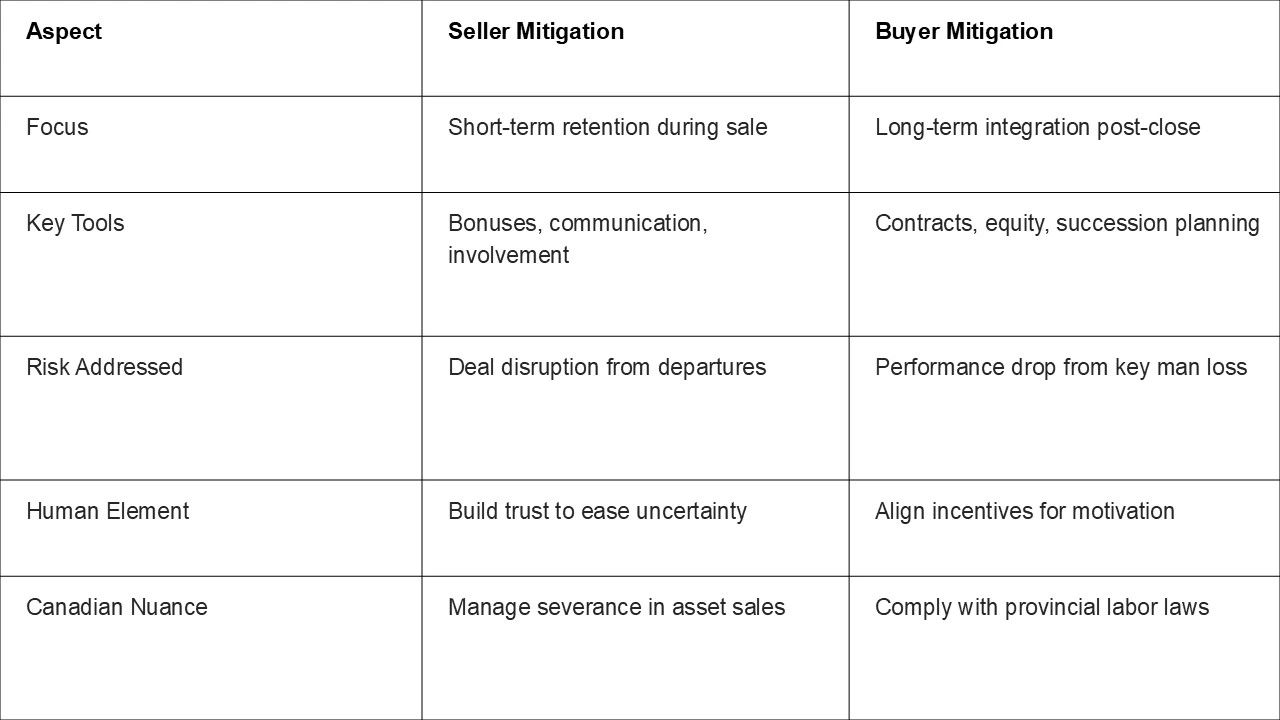
Sellers bear the brunt of retention risks during the sale process, as key employee departures can scare off buyers or force price concessions. Mitigation starts with proactive planning to secure commitment without overcommitting financially.
- Early and Transparent Communication: Inform key staff about the sale directly to build trust and reduce rumors. Involve them in due diligence where appropriate, making retention a key criterion for buyer selection. This addresses human fears head-on and signals their importance.
- Retention Bonuses and Incentives: Offer bonuses tied to deal completion and a post-closing stay period (e.g., 6-12 months). In Canada, these can be structured as a percentage of salary (15-50% for non-executives), ensuring they're reasonable to avoid tax scrutiny. Use benchmarking data to keep compensation market-competitive.
- Equity Participation or Phantom Shares: For internals, consider employee ownership models, leveraging Canada's tax incentives for sales to employees. This aligns interests and rewards loyalty, though it requires careful valuation to prevent disputes.
- Legal Protections: Include non-compete and non-solicitation clauses in employment agreements. In asset sales, negotiate with buyers to rehire staff on similar terms, minimizing severance costs.
By focusing on these, sellers can enhance transferability, potentially boosting valuation by demonstrating a resilient team. However, over-incentivizing risks inflating costs or creating entitlement issues.
How Buyers Mitigate Key Man Risk Post-Acquisition
Once the deal closes, buyers inherit key man risk,the potential loss of critical talent that could undermine synergies or value. Their strategies emphasize integration and long-term alignment, differing from sellers' focus on short-term stability.
- Comprehensive Due Diligence on Talent: Pre-close, assess key personnel's roles and risks. Post-close, identify "mission-critical" talent beyond executives, including rising stars. In Canada, review employment contracts for compliance with labor laws.
- Employment Agreements and Incentives: Offer new contracts with competitive pay, including retention bonuses (e.g., 51-200% of base for CEOs) and performance-based earnouts. Equity in the acquiring entity can tie employees to long-term success.
- Cultural Integration and Change Management: Address human dynamics through clear communication about roles and culture. Establish joint committees for smooth transitions, especially in cross-border deals. Document processes to reduce dependency on individuals.
- Succession Planning and Knowledge Transfer: Build repeatable systems for sales and operations, empowering teams and shifting client relationships away from single points of failure. Hire successors early to demonstrate resilience.
Buyers often budget for retention as part of the acquisition cost, viewing it as insurance against value erosion. In strategic acquisitions, partial seller equity retention can further align interests.
Conclusion
Compensating key people during a Canadian business sale is a delicate balance of financial incentives, legal compliance, and emotional intelligence. Sellers mitigate risks by prioritizing transparency and targeted rewards to ensure a smooth handover, while buyers focus on integration to neutralize key man dependencies. Ultimately, addressing human dynamics, through empathy and alignmentcan elevate the business's value and ensure lasting success for all parties. Business owners should consult advisors early to tailor these strategies to their unique context.