What Atlantic owners told us about due diligence
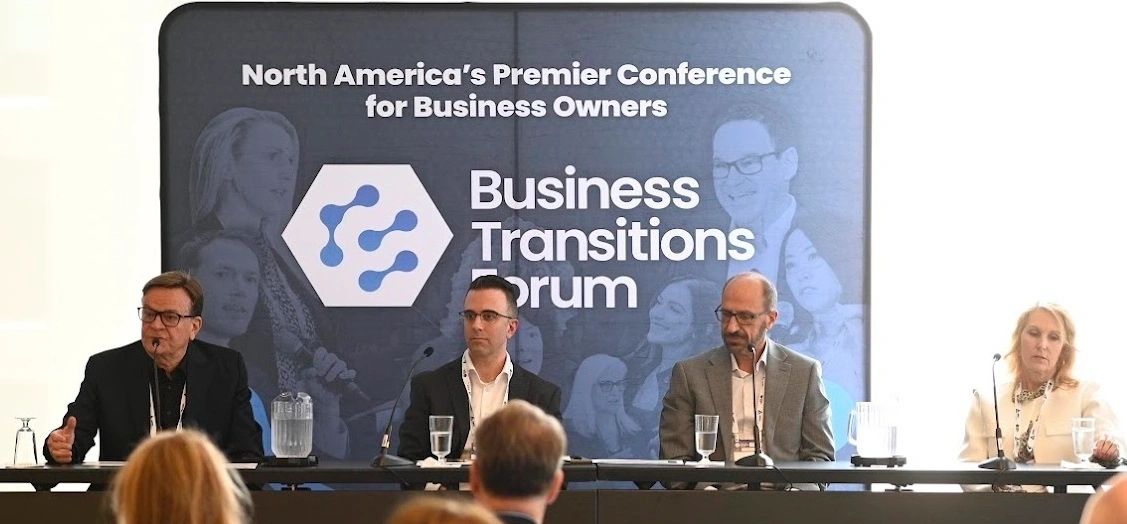
What Atlantic owners told us about due diligence: takeaways from the BTF Halifax panel
Yesterday afternoon at the Halifax Convention Centre, I had the privilege of moderating "DD in a Box: Understanding the Process and Avoiding Surprises" at the Business Transitions Forum Atlantic. The 50-minute breakout brought three sharp practitioners to the stage: Bradley Cameron, senior manager, valuations, BT Advantage at Baker Tilly Nova Scotia; Aurèle Courcelles, vice-president, tax and estate planning at IG Wealth Management; and Georgia Pothier, co-founder of Best Kind Edibles and the seller behind Always Home Homecare.
The room was full of Atlantic Canadian owners, a heavy contingent of advisors, and the questions ran over the allotted time. Five takeaways are worth recording for anyone who could not be in the room.
1. Due diligence is not the closing-table event most owners think it is
The panel was unanimous: the work that determines whether due diligence proceeds smoothly is done 12 to 24 months before a buyer ever sees a data room. Owners who first encounter a buyer's diligence checklist during the deal itself almost always lose value, give back representations, or extend the timeline. The Canadian deals that close on terms are the ones where the seller has already pressure-tested the same questions internally.
Source: CBV Institute, "Due Diligence in Private Company Transactions: Practitioner Guidance," 2024. https://cbvinstitute.com
2. Financial scrutiny starts with normalized EBITDA, not reported EBITDA
Bradley Cameron's point on financial preparation was that buyers do not value reported earnings. They value normalized earnings, and the burden of proof for every adjustment sits with the seller. Owner compensation above market, related-party rents, one-time professional fees, discretionary expenses run through the company: each of these requires a documented, defensible adjustment. Sellers who hand over a normalization schedule without supporting evidence routinely watch buyers strip half of the adjustments out at the indications-of-interest stage.
Source: CBV Institute, "Normalized Earnings in Private Company Valuations," practice guidance, 2023. https://cbvinstitute.com
3. Tax structure decisions made today govern net proceeds 24 months from now
Aurèle Courcelles framed the tax-preparation discussion around a simple test: most Canadian owners are not currently positioned to claim the Lifetime Capital Gains Exemption on their full share base. The 2024 LCGE limit on qualified small business corporation shares was $1,016,836 per individual, indexed annually. The qualified small business corporation purification test, however, looks back 24 months. Holdco redemptions, asset sales, and dividend strategies all change LCGE eligibility. Owners who decide on the LCGE strategy in the same year they decide to sell typically miss the window.
Source: Canada Revenue Agency, "Capital gains deduction" (T657 guidance), updated 2024. https://www.canada.ca/en/revenue-agency/services/tax/individuals/topics/about-your-tax-return/tax-return/completing-a-tax-return/personal-income/line-25400-capital-gains-deduction.html
4. The seller's experience matters: deal fatigue is the under-discussed risk
Georgia Pothier brought the operator's perspective. Her point on deal fatigue: a Canadian sell-side process runs nine to 14 months from engagement to closing, and the founder is required at every stage. Owners who have not pre-arranged operational coverage, or who are still running the business full-time during diligence, frequently make late-stage concessions simply to end the process. This is one of the strongest arguments for a properly structured advisor team: the advisors absorb the deal load, the owner stays focused on running the company, and the company's performance through the process holds up.
Source: BDC, "The state of small business succession," 2024. https://www.bdc.ca/en/articles-tools/business-strategy-planning/manage-business/business-succession-canada
5. Working capital remains the most under-modelled deal mechanic
The audience question that generated the longest discussion was on working capital. The honest answer in lower-middle-market Canadian deals: the working capital peg is the single largest non-price negotiation at closing. A target set on a trailing-12-month average can be tens or hundreds of thousands of dollars different from a target set on a normalized basis adjusted for seasonality. Sellers who do not understand the difference negotiate from a weaker position.
Source: CFIB, "Succession Tsunami," 2023. https://www.cfib-fcei.ca/en/research-economic-analysis/succession-tsunami
On artificial intelligence in due diligence
The session also touched on the role of artificial intelligence in the due diligence process. The honest read: AI is accelerating buyer-side diligence faster than seller-side preparation. Buyers are using machine-readable contract review, automated working capital normalization, and pattern-matching across customer concentration data in ways that surface seller weaknesses earlier and more reliably than human review alone. The implication for Canadian sellers is that the diligence preparation bar has risen. What was acceptable two years ago is now flagged in hours.